Blown-In Insulation in Hawthorne, CA
Energy-Saving Blown-In Insulation in Hawthorne, CA for Hawthorne, CA Homes — Licensed & Insured
Need blown-in insulation in Hawthorne, CA? Hawthorne Insulation Pros offers expert attic insulation, installation & removal. Free estimates. Call (424) 449-0089.
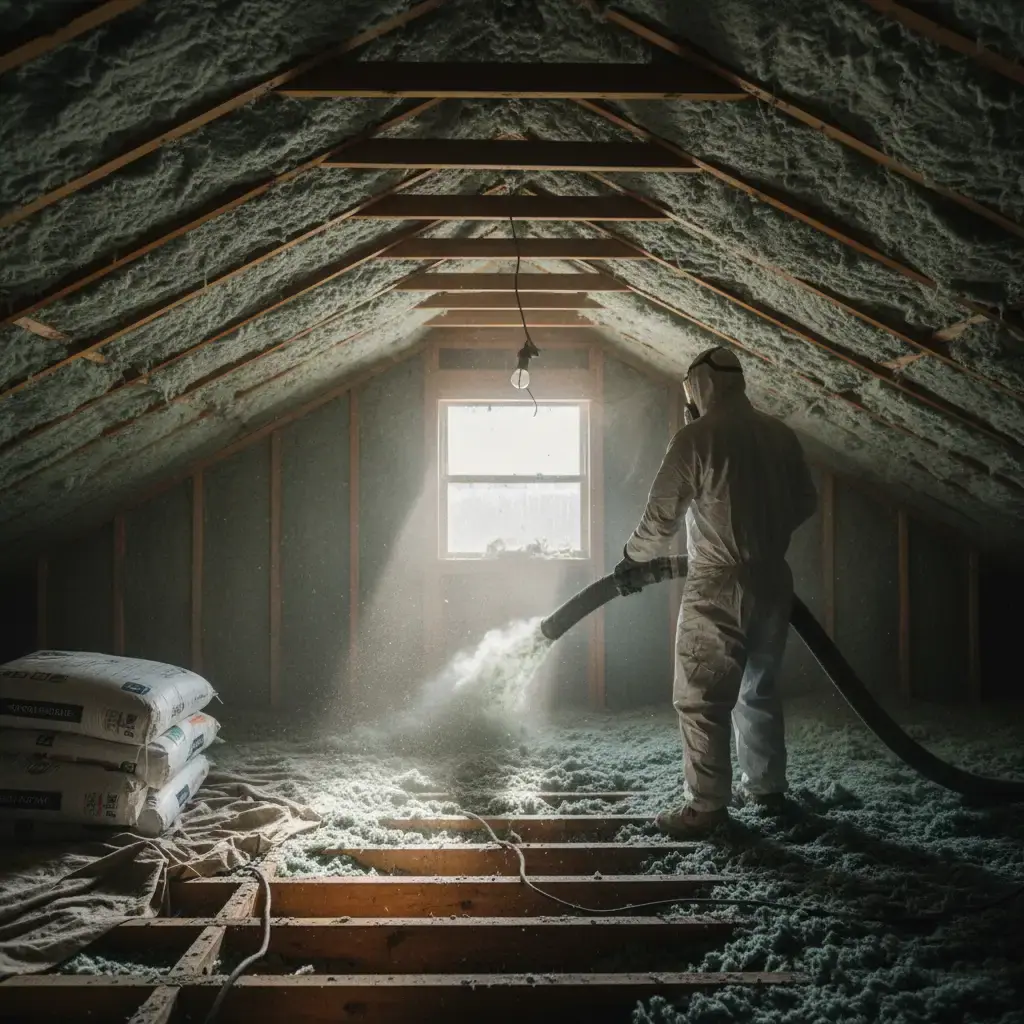
Blown-in insulation is a modern insulation method that uses specialized equipment to propel loose-fill material — typically fiberglass, cellulose, or mineral wool — into wall cavities, attic floors, and hard-to-reach spaces, creating a seamless thermal and acoustic barrier throughout your home or commercial property.
In Hawthorne, CA, the combination of coastal marine air flowing in from the Pacific Ocean, the radiant heat generated by proximity to Los Angeles International Airport (LAX) flight corridors, and the city’s dense stock of post-war bungalows and mid-century tract homes makes blown-in insulation not just a comfort upgrade — it’s a necessity. Outdated or missing insulation forces HVAC systems to work harder, driving up energy bills and reducing indoor air quality.
Read moreShow less
At Hawthorne Insulation Pros, we deliver expert blown-in insulation installation, removal, and attic insulation services tailored specifically to the building types and climate conditions found throughout Hawthorne and the surrounding South Bay communities. Call us today at (424) 449-0089 to schedule your free assessment.
Understanding Blown-In Insulation
Blown-in insulation — also called loose-fill insulation — has been used in residential and commercial construction since the mid-20th century, evolving significantly as building science advanced. Unlike batt insulation, which is cut in rigid panels and fitted between studs, blown-in material is mechanically propelled through a flexible hose and deposited in a continuous layer that conforms to every corner, joist cavity, and irregular surface it encounters. This makes it uniquely effective in older structures where framing is inconsistent or where retrofitting batts would require invasive wall teardown.
The three most common blown-in materials each serve distinct purposes. Cellulose, made primarily from recycled paper treated with borate fire retardants, offers excellent thermal performance (R-3.2 to R-3.8 per inch) and is particularly effective at filling dense-pack wall cavities. Fiberglass loose-fill is lightweight, non-combustible, and resists moisture absorption — a critical consideration in coastal environments. Mineral wool (rock wool) provides superior fire resistance and sound attenuation, making it popular in multi-family buildings and properties near high-noise corridors.
Read moreShow less
Hawthorne’s housing stock tells a specific story. The city was largely developed between the 1940s and 1970s, following the post-World War II suburban expansion driven by the aerospace and aviation industries anchored at Northrop Grumman and nearby defense contractors. Thousands of homes in neighborhoods like Ramona and Holly Glen were built quickly during this era with minimal or no insulation — or with insulation that has since settled, degraded, or become contaminated with rodent activity. Many of these homes sit on concrete slab foundations with uninsulated attic spaces, making blown-in attic insulation the single most impactful energy efficiency upgrade available.
Modern blown-in systems can achieve recommended R-values of R-38 to R-60 in attic applications — the range recommended by the U.S. Department of Energy for Climate Zone 3, which covers the greater Los Angeles basin including Hawthorne. Achieving this performance level with batts alone would require multiple layers and significant labor, whereas blown-in installation can reach target depth in a single day.
Why Blown-In Insulation Is Needed in Hawthorne, CA
The Marine Layer and Coastal Humidity
Located approximately 5 miles from the Pacific Ocean coastline at Manhattan Beach and Hermosa Beach, Hawthorne sits squarely within the South Bay’s marine influence zone. The June Gloom phenomenon — persistent coastal fog and overcast skies from May through July — keeps daytime temperatures suppressed but introduces sustained ambient humidity levels that can exceed 85% during morning hours. This cyclical humidity infiltrates attic spaces through soffit vents and ridge vents, gradually degrading cellulose insulation through moisture absorption and promoting mold growth within poorly ventilated attic cavities. Homes in the Bodger Park and Holly Glen neighborhoods, many built in the early 1950s, frequently show moisture-compromised insulation that has compacted to a fraction of its original depth.
Heat Island Effect and Airport Proximity
Hawthorne’s urban density and its proximity to Los Angeles International Airport — just 2.3 miles northwest of city center — create compounding thermal stressors. The airport’s vast expanse of asphalt tarmac and concrete infrastructure contributes to a measurable heat island effect that pushes summer temperatures in northwestern Hawthorne neighborhoods like Ramona 3°F to 5°F higher than coastal readings. During the record-breaking heat events of September 2022, when the Los Angeles basin sustained temperatures above 100°F for multiple consecutive days, homes in the Ramona area without adequate attic insulation reported indoor temperatures exceeding 88°F even with air conditioning running continuously.
Seismic Activity and Structural Settling
Los Angeles County averages hundreds of minor seismic events annually. The 1994 Northridge Earthquake — a magnitude 6.7 event centered approximately 26 miles north of Hawthorne — caused widespread structural micro-cracking throughout the South Bay, including in homes along West 120th Street and near Prairie Avenue. These micro-cracks in wall cavities and attic framing create pathways for air infiltration that progressively worsen, allowing conditioned air to escape and drawing unconditioned outdoor air in. Dense-pack blown-in cellulose directly addresses these infiltration pathways by filling cavities under slight positive pressure.
Pest Activity in Attic Spaces
Hawthorne’s warm climate and mature tree canopies — particularly along Ramona Avenue and in the older residential blocks east of Crenshaw Boulevard — provide ideal habitat corridors for roof rats and squirrels that frequently colonize attic spaces. Rodent activity contaminates existing insulation with urine and feces, compresses it through nesting behavior, and necessitates complete removal before new blown-in material can be installed. Our team regularly finds original 1950s-era rock wool or early fiberglass batts reduced to less than 2 inches of effective depth after years of rodent compression — far below the R-38 minimum recommended for this climate zone.
Free, no-obligation estimates
Talk to Hawthorne Insulation Pros
Tell us what you need and we’ll take it from there.
Signs You Need Blown-In Insulation in Hawthorne
Energy and Comfort Indicators
- Monthly electricity bills exceeding $180–$220 during summer months in a standard 3-bedroom Hawthorne home
- Rooms that feel significantly warmer or cooler than the thermostat setting, particularly second-floor bedrooms under the roofline
- HVAC system running almost continuously during June through September without reaching the set temperature
- Cold drafts near exterior walls or ceilings during the mild Hawthorne winter months (December–February)
Visual and Physical Symptoms
- Attic insulation depth measuring less than 10 inches (indicating R-values below the recommended R-38 minimum)
- Visible gaps, bare wood joists, or areas where insulation has shifted or settled unevenly
- Discoloration, dark staining, or a musty odor in attic insulation indicating moisture damage
- Evidence of rodent tunneling, nesting material, or droppings mixed with existing insulation
Urgency Indicators
- Home was built before 1978 and has never had insulation professionally assessed or replaced
- Visible mold or mildew on attic sheathing boards or rafters, indicating moisture is not being managed
- Recent rodent infestation requiring pest control — contaminated insulation must be removed immediately for health reasons
- Ice dams forming at roof eaves (rare in Hawthorne but possible during unusual cold snaps)
Our process
Our Blown-In Insulation Installation Process
At Hawthorne Insulation Pros, we follow a structured, multi-step process designed to deliver consistent, code-compliant results in the specific building types found throughout Hawthorne and the South Bay. Here is what to expect from your first contact to project completion.
- 01
Free In-Home Assessment (1–2 Hours)
Our technician visits your property, measures existing insulation depth with calibrated probes, inspects attic ventilation, checks for moisture intrusion, and photographs any areas of concern. We review your current utility bills and note any comfort complaint
- 02
Insulation Removal (If Required) (Half Day to Full Day)
If existing insulation is contaminated, compressed below functional levels, or harboring rodent debris, we perform complete vacuum removal using HEPA-equipped extraction units. All removed material is bagged, sealed, and disposed of per Los Angeles County wast
- 03
Air Sealing and Prep Work (2–4 Hours)
Before any blown-in material is installed, we seal attic bypasses — gaps around recessed lighting, plumbing penetrations, HVAC chases, and top plates — using fire-rated caulk and spray foam. In Hawthorne’s older bungalows, this step alone can reduce air infilt
- 04
Installation of Depth Markers (30 Minutes)
We install depth ruler sticks throughout the attic space at regular intervals, per California Title 24 energy code requirements. These markers allow inspectors and future assessors to verify installed depth without disturbing the insulation.
- 05
Blown-In Insulation Application (2–4 Hours)
Using truck-mounted or portable blowing equipment, we install your chosen material — cellulose, fiberglass, or mineral wool — to the specified depth targeting R-38 to R-60 depending on your home’s needs and budget. Our crews pay special attention to eave areas
- 06
Final Depth Verification and Cleanup (1 Hour)
We walk the attic after installation, verifying depth at every marker. Any low spots are topped off. The work area is cleaned, and attic access points are resealed. You receive a written installation report documenting installed depth, R-value achieved, and ma
- 07
Post-Installation Follow-Up (2–4 Weeks Later)
We follow up to confirm your comfort levels have improved and answer any questions about your new insulation system.
Blown-In Insulation Methods and Approaches
Open-Blow Attic Application
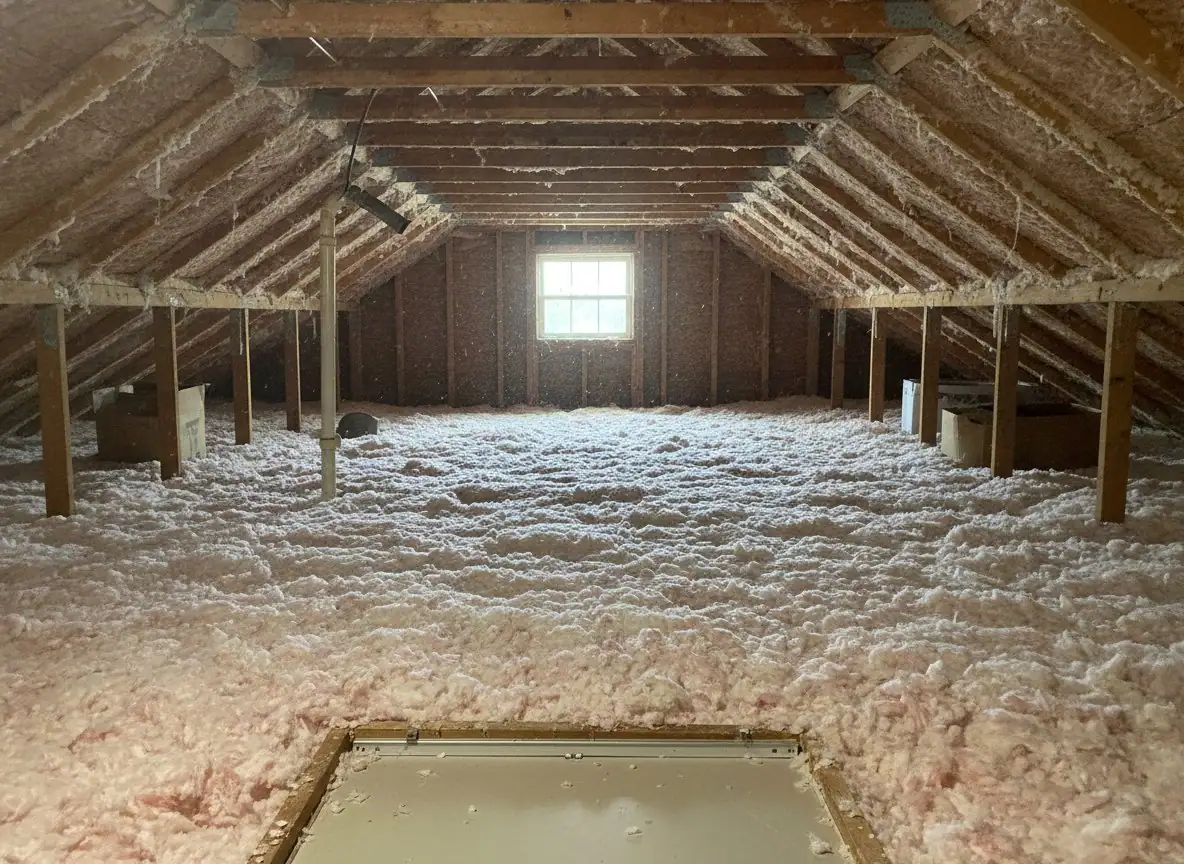
The most common method in Hawthorne’s single-family homes, open-blow installs loose-fill material directly over attic floor joists in an unobstructed attic space. This approach is fast, cost-effective, and ideal for the flat or gently pitched attics common in 1950s–1970s ranch-style homes throughout Holly Glen and the Ramona neighborhood. Target depth for R-38 using cellulose is approximately 10.5 inches; R-60 requires approximately 16.5 inches.
Dense-Pack Wall Cavity Application
For older homes with uninsulated exterior wall cavities — common in pre-1960 construction along Imperial Highway corridor — dense-pack installs cellulose or fiberglass under 3.0–3.5 lbs/cubic foot pressure through small holes drilled in the exterior siding or drywall. This method fills cavities completely, eliminates convective looping within wall voids, and resists future settling. It is the preferred approach when avoiding major interior renovation work.
Stabilized or Spray-Applied Blown-In
In attic environments with strong cross-ventilation — such as homes near the beach-facing neighborhoods near El Segundo — dry blown-in material can shift before it settles. Stabilized blown-in adds a small amount of moisture to cellulose during installation, causing it to bind as it dries. This is ideal for steep-pitch or well-ventilated attic spaces where material drift is a concern.
Net-and-Blow for Sloped Ceiling Cavities
Cathedral ceilings and sloped rafter bays common in some 1960s architectural homes in Hawthorne’s Bodger Park area require a netting system installed between rafters before insulation is blown in from above. This prevents material from falling through and ensures full cavity fill.
Blown-In Insulation Cost in Hawthorne, CA
Understanding the cost of blown-in insulation in Hawthorne helps homeowners budget accurately and compare quotes with confidence. Pricing varies based on square footage, existing conditions, material choice, and project complexity.
Typical Price Ranges
- Attic blown-in insulation (open-blow): $1.50–$3.00 per square foot installed, including materials and labor. A standard 1,200 sq ft Hawthorne bungalow attic typically runs $1,800–$3,600.
- Dense-pack wall cavity insulation: $3.00–$6.00 per square foot due to additional drilling, patching, and labor time.
- Insulation removal prior to installation: $1.00–$2.50 per square foot for vacuum extraction and disposal.
- Full attic removal and re-insulation package: $3,500–$7,000 for a typical Hawthorne home, covering removal, air sealing, and new blown-in installation.
Read moreShow less
Factors That Affect Your Cost
- Attic accessibility: Low-pitch attics (common in 1960s tract homes) require more time and may increase labor costs by 15–25%.
- Material selection: Mineral wool costs approximately 20–30% more than cellulose but offers superior fire and sound resistance.
- Existing contamination: Rodent-contaminated insulation requires bio-hazard handling, adding to removal costs.
- R-value target: Upgrading from R-11 to R-60 requires more material than upgrading from R-19 to R-38.
Local Pricing Context
Hawthorne and the greater South Bay area sit at a moderate cost tier within the Los Angeles metro. Labor rates here are generally 10–15% below West Los Angeles while remaining above Inland Empire pricing. California utility rebate programs through Southern California Edison (SCE) may offset $200–$500 of project costs for qualifying upgrades. Ask our team about current rebate eligibility during your free assessment.
Neighborhoods We Serve in and Around Hawthorne, CA
Holly Glen
Located in the southwestern corner of Hawthorne near the Lawndale border, Holly Glen is one of the city’s most established residential communities. Homes here were largely built between 1948 and 1962 and frequently feature original fiberglass batt insulation that has settled to 3–4 inches — delivering roughly R-11 against the recommended R-38. We regularly perform full attic upgrades throughout this neighborhood.
Ramona Neighborhood
Centered around Ramona Avenue north of El Segundo Boulevard, this area’s proximity to LAX and the associated heat island effect makes it one of Hawthorne’s most thermally stressed residential zones. Dense-pack wall cavity work is particularly common in the pre-1955 homes along this corridor, where exterior walls were constructed without any insulation at all.
Bodger Park
Southeast Hawthorne’s Bodger Park area includes a mix of 1950s ranch homes and 1970s apartment buildings. Multi-family properties here benefit significantly from mineral wool blown-in insulation for both thermal performance and sound reduction between units. Learn more about our attic insulation services
We also serve Carson, Compton, Gardena, Lawndale, Torrance, Inglewood, El Segundo, Culver City, Lennox, Hermosa Beach, Redondo Beach, Manhattan Beach, Westchester, and all surrounding South Bay communities. Call (424) 449-0089 to confirm service availability in your area.
Blown-In Insulation Maintenance Tips for Hawthorne Homeowners
Proper maintenance extends the performance life of your blown-in insulation and protects your investment. Here are key tips tailored to Hawthorne’s specific climate conditions.
- Inspect attic depth annually: Check that depth ruler sticks are still visible at their original markings. Cellulose can settle 10–15% in the first year; if depth has dropped significantly, a top-off application may be needed.
- Monitor attic ventilation each spring: Ensure soffit vents and ridge vents are unobstructed. Blocked ventilation traps coastal humidity and accelerates insulation moisture damage — especially critical during June Gloom season.
- Seal new penetrations promptly: Any time an electrician, plumber, or HVAC technician works in the attic, inspect for new gaps around their work and re-seal with fire-rated caulk.
- Check for pest entry points after winter: Inspect roof eaves, fascia boards, and soffit panels for gaps that could allow roof rats or squirrels to enter. The cooler December–February period often drives rodents indoors.
- Look for moisture staining on attic sheathing: During the rainy season (November–March), inspect your attic for dark water stains on sheathing boards, which indicate roof leaks that will compromise insulation.
- Replace insulation after any rodent infestation: Do not attempt to salvage contaminated insulation. Complete removal and replacement is required for health compliance.
- Review energy bills seasonally: A sudden increase in summer cooling costs without a rate change often signals that insulation has been compromised.
Why Choose Hawthorne Insulation Pros
At Hawthorne Insulation Pros, we are not a national franchise operating from a call center — we are a locally focused insulation contractor with deep knowledge of the specific building types, climate conditions, and regulatory environment in Hawthorne and the South Bay. When you call us, you speak directly with technicians who know the difference between a Holly Glen bungalow and a Bodger Park apartment complex and understand how each demands a different insulation approach.
Our team is trained on California Title 24 energy code compliance, ensuring your installation is not only effective but properly documented for any future home sale or permit inspection. We use only high-quality, third-party tested insulation materials from established manufacturers, and our installation crews are experienced with the coastal humidity and heat island conditions unique to the western Los Angeles basin.
Read moreShow less
We offer transparent, itemized quotes — no hidden fees, no upselling of unnecessary services. Our free in-home assessments give you clear, honest information about what your home actually needs. We proudly serve all of Hawthorne and the greater South Bay, from Lennox to Manhattan Beach, Culver City to Carson.
Ready to take control of your home’s comfort and energy costs? Call us at (424) 449-0089 today.
FAQ
Frequently Asked Questions About Blown-In Insulation in Hawthorne, CA
How much does blown-in insulation cost in Hawthorne, CA?
For a typical Hawthorne single-family home with a 1,000–1,400 sq ft attic footprint, open-blow attic insulation runs approximately $1,800–$4,200 depending on the starting R-value, target R-value, and material chosen. If insulation removal is needed first, add $1,200–$2,500 to the total. Full project packages — removal, air sealing, and new blown-in — typically range from $3,500–$7,000 for a standard Hawthorne bungalow.
How long does blown-in insulation installation take?
For a standard attic open-blow installation with no removal required, most Hawthorne homes are completed in a single day — typically 4–6 hours for the full process including prep, installation, and cleanup. Projects requiring prior insulation removal or dense-pack wall work may extend to two days.
Is blown-in insulation better than batt insulation for Hawthorne homes?
For most Hawthorne homes — particularly those built in the 1950s–1970s with irregular framing, existing old insulation to work around, and coastal humidity concerns — blown-in is the preferred choice. It fills gaps batts cannot reach, installs faster in occupied homes without major disruption, and provides a more consistent thermal envelope. Learn more about our insulation installation options
Do I need to remove old insulation before installing blown-in?
Not always. If existing insulation is structurally sound, free of contamination, and not moisture-damaged, we can install blown-in directly over the old material to achieve the target R-value. However, if rodent activity, mold, or significant moisture damage is present — all common in older Hawthorne attics — removal is required before new insulation is installed.
Will blown-in insulation help reduce noise from LAX flight paths?
Yes, particularly when mineral wool is selected. Homes in the Ramona neighborhood and northern Hawthorne directly under common LAX approach and departure corridors benefit measurably from the sound-dampening properties of dense-pack and mineral wool applications. While insulation alone will not eliminate aircraft noise, homeowners typically report a noticeable reduction in interior sound levels after installation.
Does California offer rebates for blown-in insulation in Hawthorne?
Hawthorne residents served by Southern California Edison (SCE) may qualify for energy efficiency rebates under SCE’s Energy Efficiency Programs when upgrading insulation to meet or exceed Title 24 minimum requirements. Rebates typically range from $150–$500 depending on the scope of the upgrade. Our team can provide the documentation needed to support your rebate claim.
How long does blown-in insulation last?
Quality blown-in fiberglass and mineral wool can maintain performance for 40–80 years under normal conditions. Cellulose may require a top-off application after 15–25 years as it settles. In Hawthorne’s coastal humidity environment, the more critical factor is preventing moisture intrusion — properly ventilated attics with intact vapor management will see insulation last far longer than poorly ventilated ones.
What is the minimum R-value required in Hawthorne, CA?
Hawthorne falls within California Climate Zone 6 (coastal South Bay). California Title 24 and the U.S. Department of Energy recommend R-38 as the minimum for attic insulation in this zone, with R-49 to R-60 recommended for maximum energy savings. Most Hawthorne homes assessed by our team have existing R-values of R-7 to R-15, making the performance improvement from a new installation substantial.
Get Your Free Blown-In Insulation Estimate in Hawthorne Today
Don’t let inadequate insulation cost you another summer of high energy bills and uncomfortable rooms. Whether your Hawthorne home needs a simple attic top-off or a complete removal and replacement, Hawthorne Insulation Pros is ready to help with honest assessments and expert installation.
We serve all of Hawthorne — from Holly Glen and Bodger Park to Ramona and beyond — plus surrounding South Bay communities including Lawndale, Lennox, Inglewood, El Segundo, Gardena, Torrance, Manhattan Beach, Redondo Beach, and Culver City.
Call us now at (424) 449-0089 to schedule your free, no-obligation in-home assessment. Our team is ready to evaluate your home’s insulation, explain your options clearly, and provide a transparent, itemized quote with no hidden costs. Comfort, efficiency, and savings start with one phone call.
Schedule Your Free Assessment Online
Get in touch
Find insulation help near you
Request a free estimate online or give us a call — our team will follow up quickly.
- Call us(424) 449-0089
- Visit4910 W Rosecrans Ave, Hawthorne, CA 90250
- HoursMon-Sun 07:00-19:00