

Cellulose Insulation in Hawthorne, CA
Energy-Saving Cellulose Insulation for Hawthorne, CA Homes — Licensed & Insured
Need cellulose insulation in Hawthorne, CA? Hawthorne Insulation Pros offers expert installation, free estimates & SCE rebate help. Call (424) 449-0089 today.
Cellulose insulation is a high-performance, eco-friendly insulation material made from recycled paper fiber — typically up to 85% post-consumer content — treated with fire retardants and pest deterrents. It is blown or dense-packed into wall cavities, attic floors, and enclosed spaces to create a seamless thermal and acoustic barrier that outperforms many traditional materials.
In Hawthorne, CA, located just miles from Los Angeles International Airport and the Pacific coast, homes and commercial buildings face a unique combination of marine air intrusion, coastal humidity fluctuations, and the relentless noise corridor generated by LAX flight paths. These local conditions make cellulose insulation an especially practical and effective solution for property owners throughout the city.
Read moreShow less
At Hawthorne Insulation Pros, our team specializes in cellulose insulation installation tailored to the specific building stock, climate zone, and neighborhood conditions found right here in Hawthorne. Whether you own a 1950s post-war bungalow in the Bodger Park district or a modern multi-unit complex near Crenshaw Boulevard, we have the expertise to deliver measurable results. Call us today at (424) 449-0089 to get started.
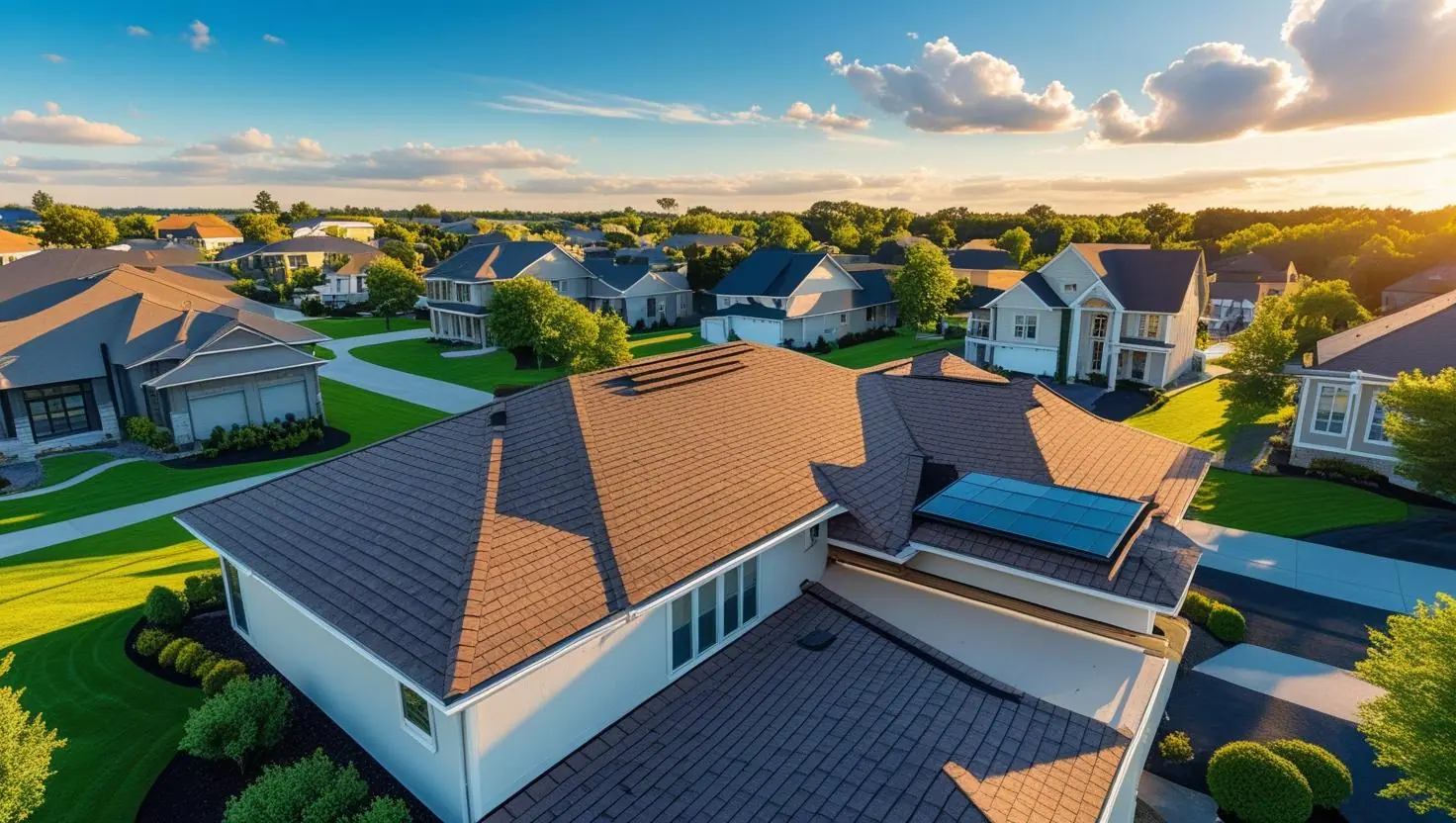
Understanding Cellulose Insulation
Cellulose insulation has one of the longest track records in building science, with roots stretching back to the early twentieth century when shredded newspaper was used informally as a home insulation material. Modern cellulose insulation, however, is a sophisticated engineered product. It is manufactured under strict ASTM C739 standards, treated with borate compounds for fire resistance and pest control, and tested to achieve consistent R-values that range from approximately R-3.2 to R-3.8 per inch of installed depth.
There are two primary forms of cellulose insulation used in residential and commercial applications today. Loose-fill cellulose is pneumatically blown into open attic floors or enclosed wall cavities, filling irregular gaps and settling around obstructions like electrical wiring and plumbing without leaving voids. Dense-pack cellulose is injected under higher pressure into enclosed wall cavities and floor systems, achieving densities of 3.5 pounds per cubic foot or more, which physically resists settling and dramatically reduces air infiltration.
Read moreShow less
One of the most important characteristics of cellulose insulation for Southern California’s coastal communities is its hygroscopic behavior. Cellulose can absorb and redistribute small amounts of moisture vapor without losing structural integrity, buffering against the humidity swings that regularly occur in Hawthorne due to its proximity to the ocean. This moisture-buffering capability is a distinct advantage over fiberglass batts, which can shift, compress, and lose effective R-value when exposed to recurring marine layer humidity.
Hawthorne’s building stock reflects the city’s development boom of the 1940s through the 1970s, when the aerospace industry — anchored by companies like Northrop Corporation on Jack Northrop Avenue — drew thousands of workers who needed housing fast. The resulting tract homes, duplexes, and apartment buildings were built quickly and often with minimal or no insulation by today’s standards. Cellulose insulation retrofit applications are ideally suited to these building types, offering a cost-effective path to modern energy efficiency without requiring invasive structural work.
Beyond thermal performance, cellulose insulation provides meaningful soundproofing benefits. Its dense, fibrous mass absorbs sound waves across a broad frequency range, making it particularly valuable in Hawthorne, where residential neighborhoods like Ramona Avenue and Kornblum Avenue sit within the FAA-designated 65 dB noise contour zone for LAX operations.
Why Cellulose Insulation Is Needed in Hawthorne, CA
The Marine Layer and Coastal Humidity Cycle
Hawthorne sits within California Climate Zone 8, approximately 4.5 miles from the Pacific Ocean coastline at Manhattan Beach. The city experiences what meteorologists describe as a persistent marine layer influence, with overnight relative humidity regularly climbing above 85% and coastal fog events occurring an average of 100 to 120 days per year between May and September — a period locals call “June Gloom” that frequently extends well into July and August. This recurring humidity cycle causes thermal bridging in under-insulated wall assemblies, contributes to condensation inside attic spaces, and accelerates the degradation of fiberglass batts that were installed without proper vapor consideration. Cellulose insulation’s hygroscopic properties allow it to buffer these moisture fluctuations without the mold risk associated with saturated fiberglass.
LAX Noise Corridor and Acoustic Stress
The Federal Aviation Administration’s Aircraft Noise Contour Maps place large portions of Hawthorne — including the El Camino Village neighborhood, sections of the Ramona neighborhood, and residential blocks along Prairie Avenue between 120th and 135th Streets — within the 65 to 70 dB Day-Night Average Sound Level (DNL) contour. Aircraft operations at LAX exceed 700 daily departures and arrivals, generating sustained low-frequency noise that penetrates standard wall assemblies with ease. Dense-pack cellulose insulation installed in wall cavities and attic spaces raises the Sound Transmission Class (STC) rating of typical wall assemblies by 4 to 8 points, a perceptible and measurable improvement in acoustic comfort for residents.
Aging Building Stock and Thermal Gaps
The City of Hawthorne’s building permit records and the 2020 American Community Survey indicate that approximately 62% of the city’s residential housing units were built before 1980. Many of these structures were constructed when California’s Title 24 Energy Code did not yet exist — it was not adopted until 1978 — meaning they were built with no mandated minimum insulation requirements. Field assessments in neighborhoods like Bodger Park and Holly Glen regularly reveal attic spaces with only 2 to 3 inches of deteriorated fiberglass batts, yielding effective R-values as low as R-6 against the current California code minimum of R-38 for Climate Zone 8 attics. Blown cellulose can bring these attics up to code-compliant levels in a single installation session.
High Electricity Costs and Cooling Loads
Southern California Edison serves Hawthorne residents, and average residential electricity rates as of 2024 exceed $0.28 per kilowatt-hour under tiered rate schedules — among the highest utility rates in the continental United States. During heat events like the September 2020 regional heat wave, when temperatures in inland-adjacent neighborhoods of Hawthorne reached 102°F and exceeded cooling equipment capacity, inadequately insulated homes experienced interior temperatures rising above 85°F even with air conditioning running continuously. Proper cellulose insulation at recommended depths reduces cooling loads by 25 to 40% in typical Hawthorne residential structures, translating to hundreds of dollars in annual utility savings.
Free, no-obligation estimates
Talk to Hawthorne Insulation Pros
Tell us what you need and we’ll take it from there.
Signs You Need Cellulose Insulation in Hawthorne, CA
Energy and Comfort Indicators
- Monthly Southern California Edison bills that spike above $250 in summer months for a home under 1,800 square feet
- Rooms that feel noticeably warmer or cooler than the thermostat setting, particularly upper-floor bedrooms directly beneath the attic
- HVAC system cycling on and off more frequently than every 15 to 20 minutes during moderate weather
- Drafts or cold spots near exterior walls during winter marine layer events
Moisture and Structural Warning Signs
- Visible moisture staining or dark discoloration on interior ceiling drywall, especially in rooms beneath the attic
- A musty or earthy odor in the attic or crawl space after fog events or rain
- Existing fiberglass batts that appear flattened, discolored, or pulling away from framing members
- Ice dam damage along eaves — though rare in Hawthorne, extreme cold snaps have caused condensation-related damage along rooflines
Acoustic and Age-Related Indicators
- Clearly audible aircraft noise inside bedrooms or living areas along the LAX flight path over Prairie Avenue or Inglewood Avenue
- A home built before 1978 that has never had an insulation upgrade or professional energy audit
- Attic insulation depth of less than 10 inches when measured with a ruler during a visual inspection through the attic hatch
Cellulose Insulation Methods and Approaches
Loose-Fill Blown Cellulose (Open Attic Application)
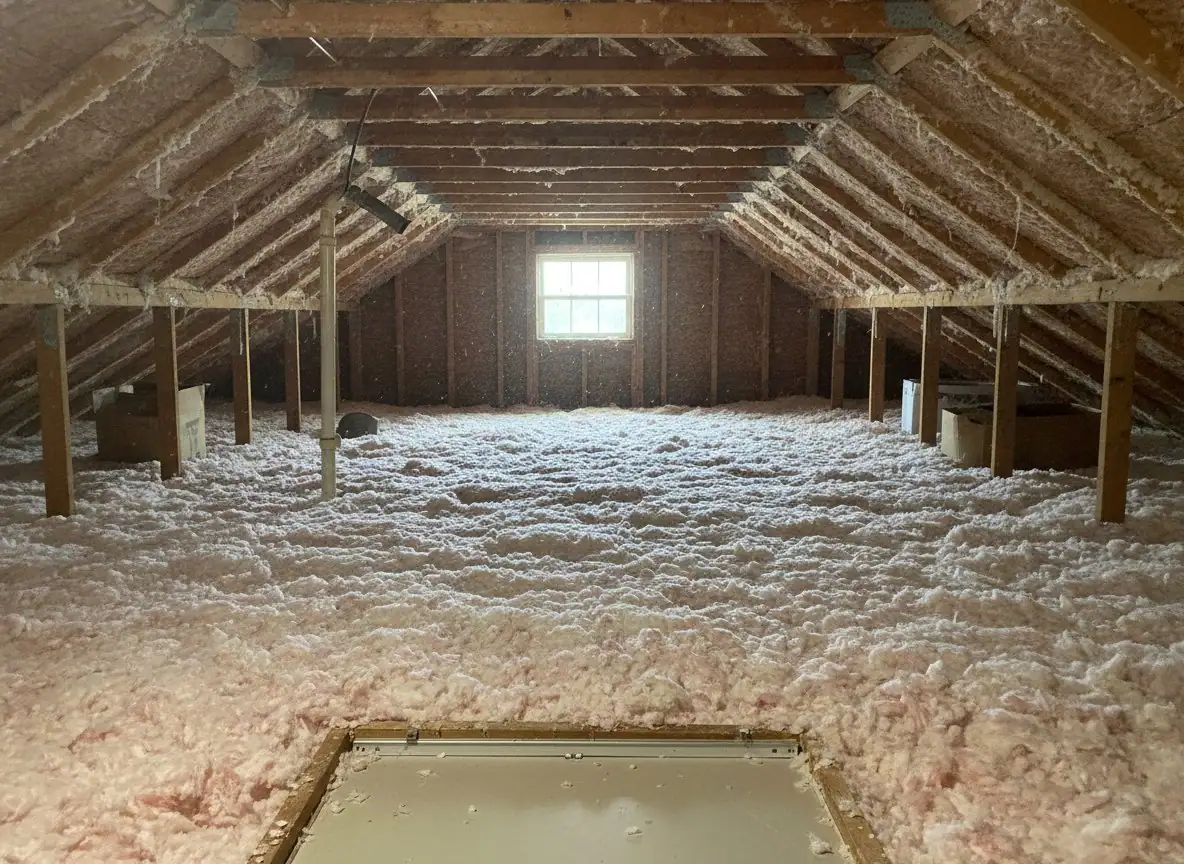
This is the most common method used in Hawthorne’s single-family homes and bungalows. Cellulose is pneumatically blown across an open attic floor to the required depth. It is ideal for homes in Bodger Park, Holly Glen, and the Ramona neighborhood where existing attic hatches provide easy access. Installation time for a typical 1,200 to 1,500 square foot attic floor runs 3 to 5 hours. This method achieves consistent R-values and completely fills around existing HVAC ducts and electrical runs without displacement.
Dense-Pack Cellulose (Closed Wall Cavities)
Used in Hawthorne’s pre-1978 homes where exterior walls were built without insulation and walls cannot be opened without significant renovation cost. Small access holes are drilled at regular intervals through siding, sheathing, or interior drywall, and cellulose is injected at high pressure to achieve 3.5+ lbs per cubic foot density. This density is sufficient to prevent future settling and to meaningfully improve acoustic performance — a priority for homes within the LAX noise contour.
Spray-Applied Cellulose (Wet Spray)
Used during new construction or major renovation projects where wall cavities are open before drywall installation. A small amount of water or adhesive is mixed with the cellulose during application to help it adhere to studs and prevent slumping before the drywall is hung. This method is increasingly used in Hawthorne’s active ADU (accessory dwelling unit) construction projects.
Attic Encapsulation with Cellulose and Air Sealing Combination
A comprehensive approach combining air sealing at all attic penetrations followed by deep loose-fill cellulose installation. This method is recommended for Hawthorne homes where blower door testing reveals ACH50 values above 8.0, indicating significant uncontrolled air leakage that insulation alone cannot address. Learn more about our attic insulation services
Cellulose Insulation Cost in Hawthorne, CA
Understanding the cost of cellulose insulation in Hawthorne requires accounting for several local factors including the age and accessibility of your building, the installation method required, and the target R-value specified by California’s Title 24 energy code for Climate Zone 8.
Typical Price Ranges
- Loose-fill attic cellulose (open blow to R-38): $1.20 to $1.80 per square foot installed, or approximately $1,440 to $2,160 for a 1,200 square foot attic floor
- Loose-fill attic cellulose (deep blow to R-49 for maximum performance): $1.60 to $2.20 per square foot, or approximately $1,920 to $2,640 for 1,200 square feet
- Dense-pack wall insulation: $2.50 to $4.00 per square foot of wall surface area, depending on access method and patching complexity
- Combined attic air sealing and cellulose package: $2,000 to $3,500 for a typical Hawthorne single-family home
- Insulation removal and replacement: Add $0.80 to $1.50 per square foot for removal of existing degraded material before new cellulose installation Learn about our insulation removal service
Read moreShow less
Local Cost Factors in Hawthorne
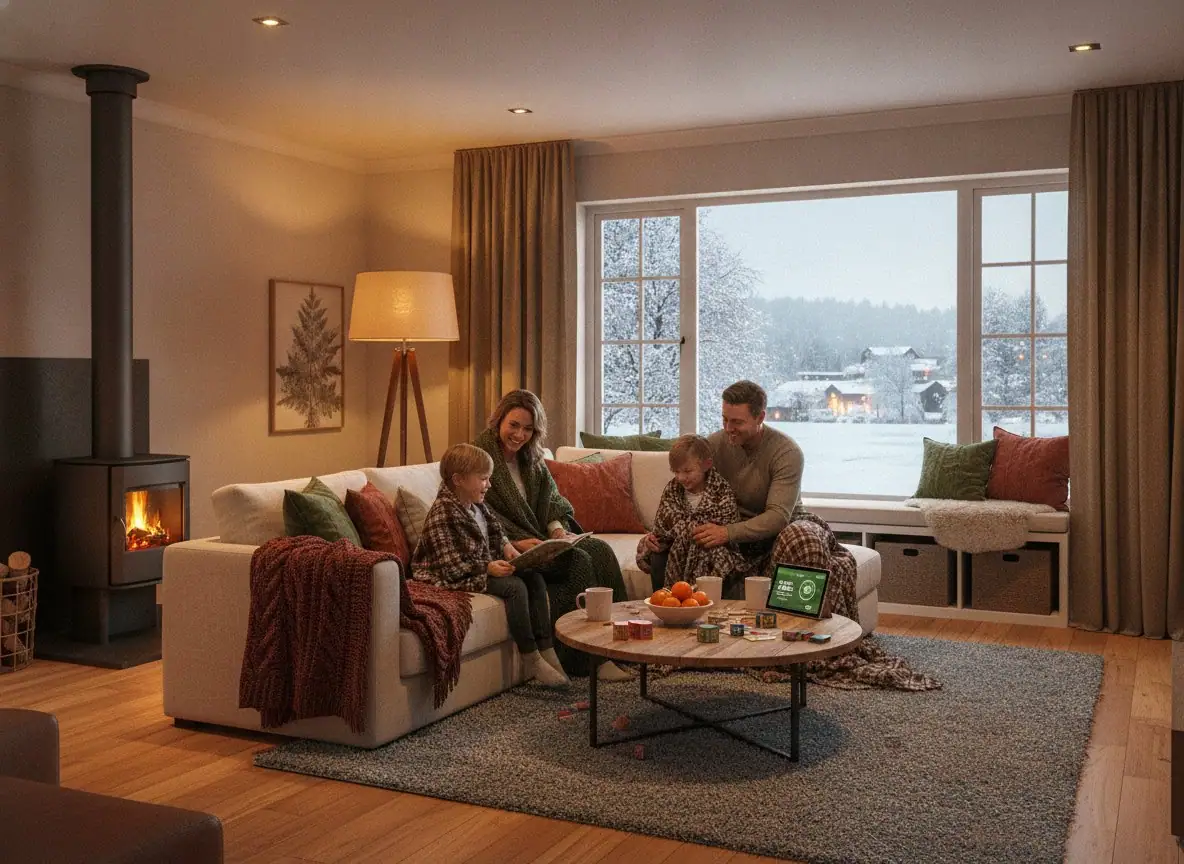
Homes along the LAX noise corridor that require dense-pack wall insulation for acoustic control typically run 30 to 45% higher than attic-only projects. Older homes in the Holly Glen and Bodger Park neighborhoods with low attic clearances under 36 inches require hand-packing in sections, adding labor cost. Southern California Edison rebates of $0.10 to $0.20 per square foot may be available for qualifying upgrades, reducing net out-of-pocket costs by $120 to $300 on a typical project.
Neighborhoods We Serve in Hawthorne, CA
Bodger Park
One of Hawthorne’s oldest residential districts, with most homes built between 1945 and 1960 following the post-war aerospace worker housing boom. These homes frequently feature shallow attic spaces, no wall insulation, and original single-pane windows. Dense-pack cellulose and loose-fill attic installations are our most common project types here.
Holly Glen
A mid-century neighborhood with a mix of 1950s ranch homes and 1960s duplexes, many of which sit within 1.5 miles of LAX flight departure paths. Acoustic improvement through wall and attic cellulose installation is a frequent driver for project inquiries in this area. Explore our blow-in insulation options
El Camino Village
Located along the eastern edge of Hawthorne near Crenshaw Boulevard, this neighborhood contains a high concentration of 1970s apartment buildings and small commercial strip developments. Multi-unit cellulose projects and crawl space insulation are common service requests here. Learn about crawl space insulation
Ramona Neighborhood
Situated near Hawthorne Municipal Airport and directly under LAX approach paths, the Ramona area combines aviation noise challenges with older wood-frame construction dating from the 1950s. Dense-pack wall cellulose is the most effective solution for residents seeking both thermal and acoustic upgrades in this corridor.
Cellulose Insulation Maintenance Tips for Hawthorne Homeowners
- Inspect attic depth annually: Check insulation depth with a ruler each fall before marine layer season intensifies. Look for signs of settling below 10 inches, which may indicate the need for a top-off application.
- Maintain attic ventilation: Ensure soffit and ridge vents remain unobstructed. Hawthorne’s coastal humidity makes proper attic airflow essential for preventing moisture accumulation in cellulose layers.
- Address roof leaks immediately: Cellulose can handle minor humidity, but direct water intrusion from a compromised roof will cause matting and potential mold growth. Inspect your roof after every significant rain event.
- Keep attic hatches weatherstripped: An unsealed attic hatch can negate a significant portion of your cellulose insulation’s thermal benefit, particularly during Hawthorne’s June Gloom high-humidity periods.
- Do not compress attic cellulose with stored items: Storing boxes or materials directly on attic cellulose compresses the fibers and reduces R-value. Use raised attic platforms or limit storage to perimeter areas near the attic hatch.
- Schedule a professional inspection every 5 to 7 years: Have a qualified insulation contractor assess settling depth, moisture content, and air sealing integrity, especially in homes built before 1978.
- Monitor utility bills as a performance gauge: A sudden increase in summer cooling costs without a rate change can signal insulation degradation or a new air leakage point that should be investigated promptly.
Why Choose Hawthorne Insulation Pros
Hawthorne Insulation Pros is a locally based insulation contractor with deep familiarity with the specific building types, climate conditions, and energy code requirements that define our city. We are not a regional franchise dispatching crews from miles away — we work in Hawthorne’s neighborhoods every week and understand the practical realities of working in tight attic spaces in Bodger Park bungalows, aging apartment crawl spaces in El Camino Village, and noise-impacted homes in the Ramona corridor.
Our team is trained in California Title 24 compliance requirements for Climate Zone 8 and stays current on Southern California Edison rebate programs so we can help you maximize the return on your insulation investment. We use only ASTM-certified cellulose products that meet California fire and building code standards.
Read moreShow less
We offer transparent, itemized written estimates with no hidden fees, and our work is backed by our commitment to complete customer satisfaction. From your first call to post-installation follow-up, we make the process straightforward and stress-free. Contact us at (424) 449-0089 to schedule your free assessment.
We also provide spray foam insulation, crawl space encapsulation, and insulation replacement services throughout Hawthorne.
FAQ
Frequently Asked Questions About Cellulose Insulation in Hawthorne, CA
How much does cellulose insulation cost in Hawthorne, CA?
For a typical Hawthorne single-family home, loose-fill attic cellulose to R-38 ranges from $1,440 to $2,160 for a 1,200 square foot attic. Dense-pack wall insulation adds $2.50 to $4.00 per square foot of wall area. Full-home packages including air sealing typically run $2,000 to $3,500. Southern California Edison rebates may offset $120 to $300 of project costs for qualifying homes. Call (424) 449-0089 for a free itemized estimate.
How long does cellulose insulation installation take in a typical Hawthorne home?
A standard attic loose-fill cellulose project in a 1,200 to 1,500 square foot Hawthorne home takes 4 to 8 hours from crew arrival to cleanup completion, including preparation and air sealing. Dense-pack wall insulation projects vary more widely depending on the number of wall cavities treated and whether access is from interior or exterior, typically ranging from one to two full days.
Is cellulose insulation safe for my family and pets?
Yes. Modern cellulose insulation is treated with borate compounds — the same family of chemicals used in contact lens solutions and eye drops — which provide fire resistance and pest deterrence. It contains no formaldehyde, asbestos, or fiberglass fibers. Once installed, it is completely inert and does not off-gas volatile organic compounds. During installation, a fine dust is present, which is why we seal off living areas and recommend occupants and pets vacate the space for 2 to 4 hours.
Will cellulose insulation help reduce the aircraft noise from LAX in my Hawthorne home?
Dense-pack cellulose in wall cavities can raise the Sound Transmission Class rating of a standard wood-frame wall by 4 to 8 STC points. Combined with attic insulation and window upgrades, many homeowners in the Ramona and El Camino Village neighborhoods report a perceptible reduction in interior aircraft noise levels. Cellulose is particularly effective at absorbing mid-frequency aircraft noise, though very low-frequency rumble requires additional measures.
How does cellulose insulation perform in Hawthorne’s coastal humidity?
Cellulose insulation’s hygroscopic properties allow it to absorb up to 20% of its weight in moisture vapor and release it without structural damage or significant R-value loss. This makes it well suited to Hawthorne’s recurring marine layer humidity cycles. However, direct water intrusion from roof leaks or plumbing failures must be repaired before or immediately after installation to prevent mold growth within the cellulose mass.
Does cellulose insulation qualify for rebates through Southern California Edison?
Yes. SCE’s Home Energy Efficiency Rebate program offers rebates for qualifying attic insulation upgrades in Climate Zone 8, typically $0.10 to $0.20 per square foot for installations meeting or exceeding R-38. We assist our Hawthorne clients with rebate documentation as part of our standard installation service.
How does cellulose insulation compare to spray foam for a Hawthorne home?
Cellulose provides excellent thermal and acoustic performance at a lower cost per square foot than spray foam and has a significantly lower environmental impact due to its recycled content. Spray foam offers superior air sealing capability and is preferred in crawl spaces or areas with direct moisture exposure. Many Hawthorne homes benefit from a hybrid approach — spray foam at critical air sealing points and dense-pack or blown cellulose for the bulk insulation layer. Learn more about spray foam insulation
Does cellulose insulation settle over time?
Loose-fill cellulose does experience an initial settling of approximately 15 to 20% within the first few months after installation, which is factored into the installation depth we specify. We install to a depth that achieves the target R-value after settling has occurred. Dense-pack cellulose at 3.5 lbs per cubic foot or greater does not exhibit meaningful settling and maintains its performance characteristics for the life of the building.
Get Your Free Cellulose Insulation Estimate in Hawthorne, CA Today
Whether you are managing high summer cooling bills, dealing with LAX aircraft noise in your bedroom, or preparing a pre-1978 home for a Title 24 compliance upgrade, Hawthorne Insulation Pros is ready to help. We serve homeowners, landlords, and property managers throughout Hawthorne’s neighborhoods — from Bodger Park to El Camino Village and everywhere in between.
Our free on-site assessments include thermal imaging, insulation depth measurement, and a no-obligation written proposal with itemized pricing. We will also identify any Southern California Edison rebates you may qualify for.
Call us now at (424) 449-0089 to schedule your free assessment. Same-week appointments are typically available. Let Hawthorne Insulation Pros deliver the comfort, energy savings, and acoustic relief your home deserves.
Get in touch
Find insulation help near you
Request a free estimate online or give us a call — our team will follow up quickly.
- Call us(424) 449-0089
- Visit4910 W Rosecrans Ave, Hawthorne, CA 90250
- HoursMon-Sun 07:00-19:00