Insulation Materials & Types in Hawthorne, CA
Energy-Saving Insulation Materials & Types in Hawthorne for Hawthorne, CA Homes — Licensed & Insured
Learn which insulation materials work best for Hawthorne, CA homes. Compare R-values, costs & climate fit. Free assessment — call (424) 449-0089.
Choosing the right insulation material for your Hawthorne home is more than a comfort decision — it’s a financial and structural one. Hawthorne sits in Southern California’s Climate Zone 8, characterized by warm, dry summers with temperatures regularly climbing into the mid-80s°F, mild winters, and year-round coastal influence from the Pacific Ocean just a few miles west. That coastal proximity brings moderate humidity, marine layer fog, and salt air — all of which affect how insulation materials perform and how long they last.
R-value measures an insulation material’s resistance to heat flow. The higher the R-value, the better the material insulates. In Hawthorne, selecting the correct R-value for your attic, walls, and crawl space directly impacts your monthly energy bills, indoor air quality, and HVAC system lifespan. Under-insulating means your air conditioner works harder during summer heat spikes; over-insulating without proper moisture control can create condensation issues in coastal conditions.
Read moreShow less
This guide covers every major insulation material available to Hawthorne homeowners — from spray foam to fiberglass batts — so you can make a fully informed decision for your specific home, budget, and climate challenges.
Understanding Insulation Types for Hawthorne Homes
Hawthorne homeowners have access to a broad range of insulation materials, each suited to different applications, budgets, and performance goals. The primary categories include spray foam, blown-in loose-fill, fiberglass batts, mineral wool, cellulose, and rigid foam board. Understanding how each behaves within Hawthorne’s specific environment is the first step toward making the right investment.
Hawthorne falls under California’s Title 24 Building Energy Efficiency Standards, which mandate minimum R-values for new construction and significant renovations. These standards are stricter than federal minimums, so homeowners planning remodels or additions must ensure their chosen material meets state compliance requirements. Working with a local insulation professional familiar with these codes is essential.
Read moreShow less
The city’s housing stock skews toward mid-century single-family homes and low-rise apartment buildings, many built between the 1940s and 1970s — an era when insulation standards were minimal or nonexistent. This means a large portion of Hawthorne homes are significantly under-insulated by today’s standards. Older wood-frame construction with narrow wall cavities may limit material options, while newer builds offer more flexibility.
Coastal air introduces mild but persistent humidity that can degrade certain insulation materials over time if moisture management isn’t part of the installation plan. Hawthorne also sits in a moderate wildfire risk area, making fire-resistant material properties an increasingly relevant consideration for homeowners in adjacent neighborhoods closer to hillside terrain.
How Hawthorne’s Climate Affects Your Insulation Material Choice
Hawthorne’s location in the South Bay coastal zone creates a unique insulation environment that differs meaningfully from inland Los Angeles communities. Understanding these local factors helps homeowners match the right material to the right application.
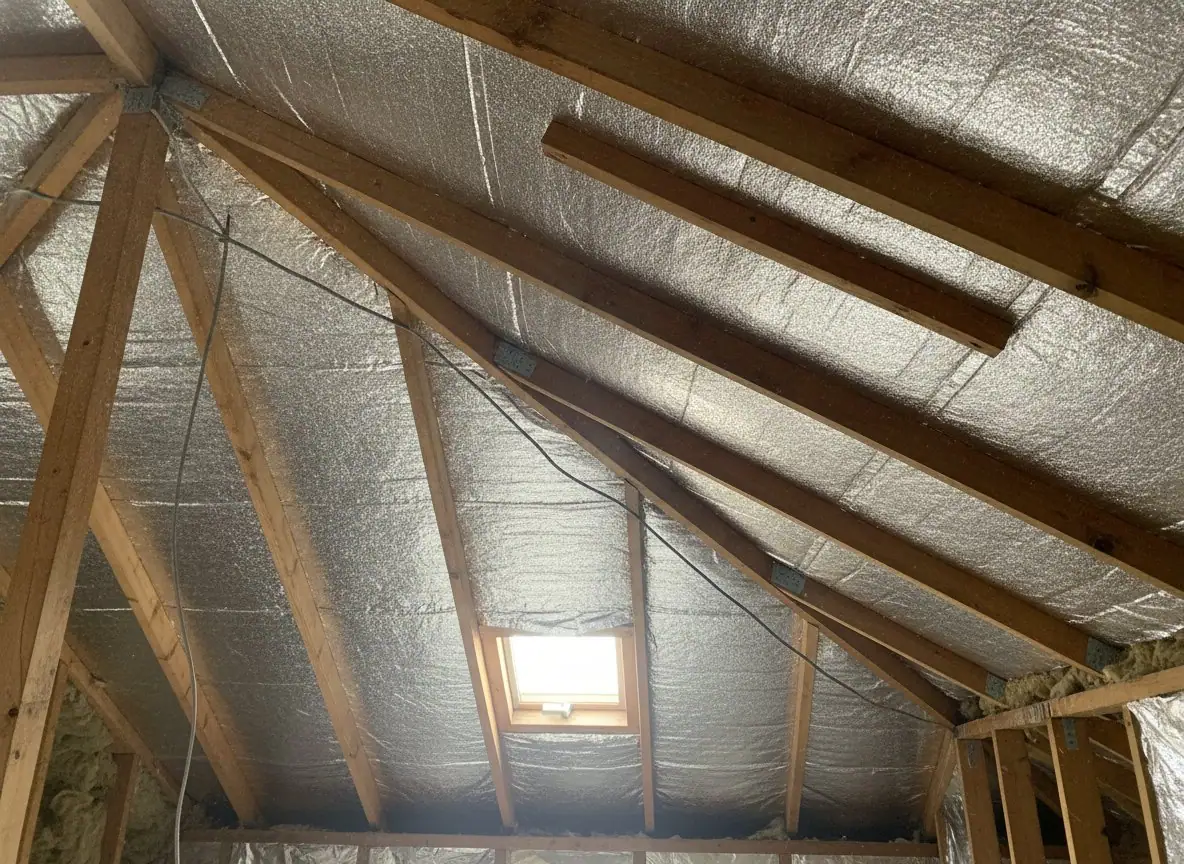
Summer heat and attic temperatures: Even with coastal moderation, Hawthorne attics routinely reach 130°F to 150°F during summer afternoons. This makes attic insulation the single highest-impact upgrade most homeowners can make. For attics, blown-in cellulose, blown-in fiberglass, or spray foam applied to the underside of the roof deck all perform well — with spray foam providing the additional benefit of air sealing alongside thermal resistance.
Read moreShow less
Coastal humidity and marine layer: The persistent marine influence means moisture management matters in material selection. Closed-cell spray foam, mineral wool, and XPS rigid foam boards all resist moisture effectively and are preferred in crawl spaces, rim joists, and exterior wall assemblies where humidity exposure is greatest.
Older wall cavities: Hawthorne’s mid-century home stock often has 2×4 framing, limiting cavity depth. Dense-pack blown-in cellulose or fiberglass can be injected through small holes without demolition — ideal for insulating existing walls without major disruption.
Title 24 compliance: California requires minimum R-38 in attics for most existing home upgrades and R-13 in walls for new construction in Climate Zone 8. Any chosen material must meet or exceed these benchmarks to qualify for rebates and pass inspections.
Wildfire awareness: While Hawthorne’s urban setting carries lower direct wildfire risk than foothill communities, fire-resistant materials like mineral wool and closed-cell spray foam provide an added margin of safety.
Free, no-obligation estimates
Talk to Hawthorne Insulation Pros
Tell us what you need and we’ll take it from there.
Insulation Materials Available in Hawthorne, CA
Spray Foam Insulation
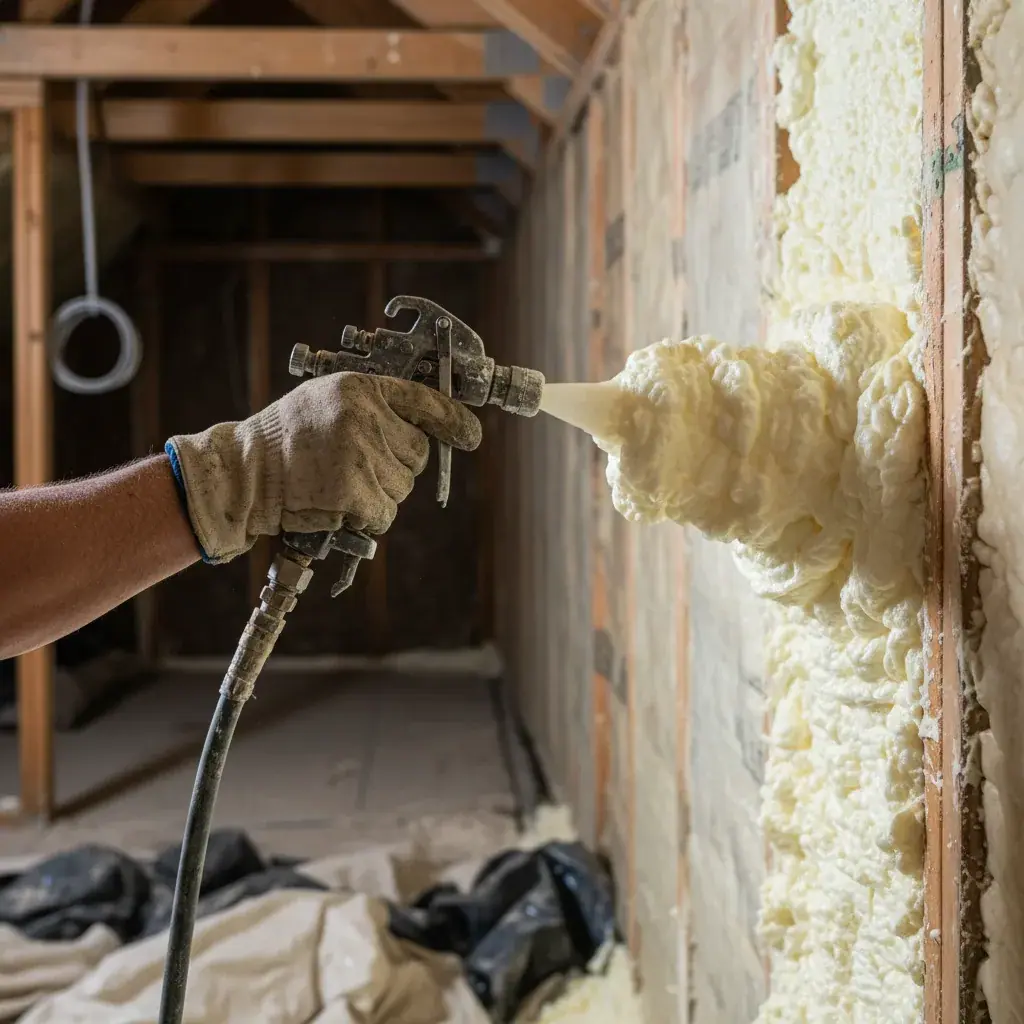
Spray polyurethane foam (SPF) is applied as a liquid that expands to fill cavities, gaps, and irregular spaces, creating an airtight thermal and moisture barrier. It comes in two forms: open-cell (lower density, softer) and closed-cell (higher density, rigid). Open-cell spray foam delivers R-values of approximately R-3.5 to R-4 per inch, while closed-cell reaches R-6 to R-7 per inch. For Hawthorne homes, closed-cell spray foam is particularly effective because its moisture-resistant properties combat coastal humidity and salt air intrusion. It also adds structural rigidity to walls. Best applications include attics, rim joists, crawl spaces, and hard-to-reach cavities. The primary drawback is cost — expect $1.50 to $3.50 per square foot installed for open-cell and $3.00 to $6.50 for closed-cell — making it one of the pricier options upfront but highly cost-effective long-term.
Learn moreBlown-In (Loose-Fill) Insulation
Blown-in insulation is machine-installed using either fiberglass or cellulose particles that settle to fill attic floors, wall cavities, and other enclosed spaces completely. R-values range from R-2.2 to R-3.8 per inch depending on material and density. This method is ideal for retrofitting Hawthorne’s aging mid-century homes where adding insulation without tearing out walls is a priority. Blown-in fiberglass resists moisture and won’t settle as dramatically over time, while blown-in cellulose offers excellent thermal performance. The method covers irregular spaces and works exceptionally well in attics, which are often the single biggest source of heat gain in Hawthorne’s summer climate. Approximate installed cost ranges from $1.00 to $2.50 per square foot, making it one of the more affordable options for whole-attic coverage. Professional installation is required for consistent coverage and proper density.
Fiberglass Batt Insulation
Fiberglass batts are pre-cut panels of spun glass fibers fitted between wall studs, floor joists, and attic rafters. They are the most widely recognized insulation material in the U.S. and carry R-values of R-2.9 to R-4.3 per inch, with common batt thicknesses achieving R-11, R-13, R-19, and R-38. For Hawthorne homes, fiberglass batts are a cost-effective solution for walls and attic floors in new construction or gut-renovation projects where cavities are open and accessible. They are non-combustible and do not absorb moisture readily, though improper installation with gaps or compression significantly reduces performance. Batts are less effective in irregularly shaped spaces. They are not a good retrofit option for finished walls without invasive demolition. Installed costs typically range from $0.50 to $1.50 per square foot, making them the budget-friendly baseline material for straightforward applications.
Mineral Wool / Rockwool Insulation
Mineral wool, commonly marketed under the Rockwool brand, is made from natural rock or recycled slag spun into dense, fire-resistant batts or boards. R-values fall between R-3.0 and R-4.2 per inch. For Hawthorne homeowners, mineral wool’s standout qualities are fire resistance (it withstands temperatures over 1,400°F), excellent sound dampening, and natural moisture resistance — a meaningful advantage in a coastal environment. It does not support mold or mildew growth, which matters when marine layer humidity is a recurring factor. Mineral wool batts fit standard stud cavities and are denser and less prone to sagging than fiberglass. Best applications include exterior walls, interior sound-control walls, garage-to-living-space separations, and attics. Installed costs typically range from $1.00 to $2.00 per square foot — slightly higher than standard fiberglass but significantly more capable in demanding conditions.
Cellulose Insulation
Cellulose is made from recycled paper products treated with borate compounds for fire and pest resistance. It is most commonly installed as blown-in loose-fill with R-values of approximately R-3.2 to R-3.8 per inch. Cellulose is one of the most environmentally friendly insulation options available and performs excellently in Hawthorne’s attics, where dense-pack installation creates effective thermal and air barriers. The borate treatment also deters rodents and insects — an added benefit in older Hawthorne homes that may have pest exposure issues. One consideration for coastal climates is moisture: cellulose can absorb humidity over time, so proper vapor control and air sealing are essential during installation. It is not recommended for areas with chronic moisture exposure. Installed costs range from $1.00 to $2.00 per square foot, offering strong thermal performance at a mid-range price point well-suited to retrofit attic projects.
Foam Board (Rigid) Insulation
Rigid foam boards — including expanded polystyrene (EPS), extruded polystyrene (XPS), and polyisocyanurate (polyiso) — are manufactured panels installed on exterior walls, under roofing, below slabs, and in crawl spaces. R-values vary significantly: EPS delivers R-3.6 to R-4.2 per inch, XPS reaches R-5 per inch, and polyiso achieves R-6 to R-6.5 per inch. For Hawthorne homes, rigid foam is especially effective as continuous insulation on exterior wall sheathing to eliminate thermal bridging through wall studs — a significant energy loss point in older construction. XPS and polyiso both offer moisture resistance suitable for Hawthorne’s coastal humidity. Foam board requires a fire-resistant facing or covering when used in interior applications per California building code. Installed costs range from $1.50 to $4.00 per square foot depending on board type and thickness, making it a strategic complement to other insulation methods rather than a standalone solution.
Why Hawthorne Homeowners Trust Hawthorne Insulation Pros for Insulation
When it comes to selecting and installing the right insulation for your Hawthorne home, experience and local knowledge make the difference between a good result and a great one. Here’s why Hawthorne homeowners consistently choose us:
Expertise across all insulation types:
Expertise across all insulation types:Our team is trained and experienced in every major insulation material — spray foam, blown-in, batts, mineral wool, cellulose, and rigid foam — so we recommend what works best for your home, not just what’s easiest to install.
Licensed and fully insured:
Licensed and fully insured:We hold all required California contractor licenses and carry comprehensive liability insurance, protecting your home and investment throughout every project.
Manufacturer-certified installers:
Manufacturer-certified installers:Our crew holds manufacturer certifications for leading insulation brands, ensuring installations meet the product specifications required for warranty coverage.
Free insulation assessment:
Free insulation assessment:We offer no-obligation, on-site insulation assessments to evaluate your current insulation levels, identify deficiencies, and provide honest material recommendations.
Warranty coverage:
Warranty coverage:We stand behind our work with both labor warranties and access to manufacturer product warranties, giving you long-term confidence in your investment.
Deep knowledge of local energy codes and rebates:
Deep knowledge of local energy codes and rebates:We stay current on California Title 24 requirements and help homeowners access available SoCalGas, SCE, and federal energy efficiency incentives to reduce project costs.
FAQ
Insulation Materials FAQ for Hawthorne Homeowners
What is the best insulation type for Hawthorne’s climate?
There is no single “best” material — it depends on location within the home and your priorities. For attics, blown-in cellulose or fiberglass provides excellent coverage and cost efficiency. For crawl spaces and areas with moisture exposure, closed-cell spray foam or XPS rigid foam is preferred. For exterior walls in older homes, dense-pack blown-in is often the most practical retrofit solution. For new construction, mineral wool batts or spray foam offer the best combination of thermal performance, fire resistance, and durability in Hawthorne’s coastal climate.
What R-value do I need for my Hawthorne home?
California’s Title 24 energy standards place Hawthorne in Climate Zone 8. For existing homes, the Department of Energy and California Energy Commission recommend a minimum of R-38 in attics, R-13 in exterior walls (or R-19 when feasible), R-19 in floors over unconditioned spaces, and R-11 in crawl space walls. New construction must meet or exceed these baselines. Older Hawthorne homes built before 1980 often have little to no insulation and benefit significantly from reaching or exceeding current recommended levels.
How do insulation material costs compare in Hawthorne?
Installed cost per square foot varies considerably by material. Fiberglass batts are the least expensive at roughly $0.50 to $1.50. Blown-in fiberglass and cellulose typically run $1.00 to $2.50. Mineral wool batts fall between $1.00 and $2.00. Rigid foam boards range from $1.50 to $4.00. Spray foam is the most expensive, ranging from $1.50 to $3.50 for open-cell and $3.00 to $6.50 for closed-cell. While spray foam carries a higher upfront cost, its superior air-sealing properties often deliver faster energy savings, narrowing the cost gap over time.
Is attic insulation or wall insulation more important for Hawthorne homes?
In Hawthorne’s climate, attic insulation typically delivers the highest return on investment. Because heat rises and attic temperatures can exceed 140°F in summer, an under-insulated attic is the primary source of cooling loss. Most energy auditors recommend addressing attic insulation first. However, older Hawthorne homes with little to no wall insulation also lose significant energy year-round. Ideally, both should be addressed — attic first for immediate impact, walls second for comprehensive comfort and efficiency.
How much can I save on energy bills by upgrading insulation?
The U.S. Department of Energy estimates that homeowners can save 10% to 20% on total energy costs by properly air-sealing and insulating their home. In Hawthorne, where summer cooling costs are the dominant energy expense, upgrading attic insulation from minimal levels to R-38 or higher can reduce cooling energy use by 20% to 30% depending on your current insulation status, HVAC efficiency, and home size. Actual savings vary, but most Hawthorne homeowners recoup attic insulation costs within three to seven years through reduced utility bills.
Are there rebates or tax credits available for insulation in Hawthorne, CA?
Yes. Hawthorne homeowners may qualify for several incentive programs. The federal Inflation Reduction Act (IRA) offers a tax credit of up to 30% of insulation material costs (up to $1,200 per year) under the Energy Efficient Home Improvement Credit. Southern California Edison (SCE) and SoCalGas periodically offer rebates for qualifying insulation upgrades. California’s TECH Clean California program supports energy efficiency improvements in existing homes. Eligibility and rebate amounts change regularly, so consulting with a local insulation professional who tracks these programs is the best way to maximize available savings.
Can I add insulation to my existing Hawthorne home without major renovation?
Yes, in most cases. Attic floors can be insulated by blowing in additional material over existing insulation without any demolition. Exterior walls in finished homes can be insulated using dense-pack blown-in techniques, where small holes are drilled into the wall, insulation is injected, and the holes are patched — leaving the wall surface largely intact. Crawl spaces can be insulated by accessing the underfloor area and installing batts or spray foam between joists. Major demolition is typically only required when walls are already being opened for renovation or when significant structural changes are underway.
Does insulation help with noise as well as temperature in Hawthorne?
Yes. Several insulation materials provide meaningful soundproofing benefits alongside thermal performance. Mineral wool (Rockwool) is particularly effective for sound control due to its dense, fibrous structure, making it popular for walls between living spaces, home offices, and rooms adjacent to noisy streets. Spray foam and dense-pack blown-in insulation also reduce sound transmission by filling gaps and cavities that allow noise infiltration. For Hawthorne homeowners near Hawthorne Municipal Airport or busy arterials like Crenshaw Boulevard, acoustic performance can be a valuable secondary benefit of upgrading insulation.
Get a Free Insulation Assessment in Hawthorne
Not sure which insulation material is right for your Hawthorne home? Hawthorne Insulation Pros offers a free, no-obligation on-site insulation assessment to help you find out. Our licensed and insured team will evaluate your attic, walls, crawl space, and any problem areas, measure your current insulation levels against California Title 24 standards, and provide honest, straightforward material recommendations tailored to your home, budget, and comfort goals.
We’ll also help you identify any available California and federal rebates or tax credits that could reduce your total project cost. Whether you’re dealing with high summer energy bills, uneven temperatures, or simply want to make your home more efficient, we’re here to guide you through every step.
Call us today at (424) 449-0089 to schedule your free assessment. Hawthorne homeowners deserve honest advice and quality work — that’s exactly what we deliver.
Why choose us
Why choose Hawthorne Insulation Pros?
Free estimates
Get a clear, no-obligation estimate before any work begins.
Licensed & insured
Your property and our crew are protected on every project.
Residential & commercial
One team for homes, multi-family and commercial properties.
Locally owned & operated
A local team serving your community and the surrounding area.
Get in touch
Find insulation help near you
Request a free estimate online or give us a call — our team will follow up quickly.
- Call us(424) 449-0089
- Visit4910 W Rosecrans Ave, Hawthorne, CA 90250
- HoursMon-Sun 07:00-19:00